The Conflict Between Logic and Dogma – A Critical Examination of Belief Systems
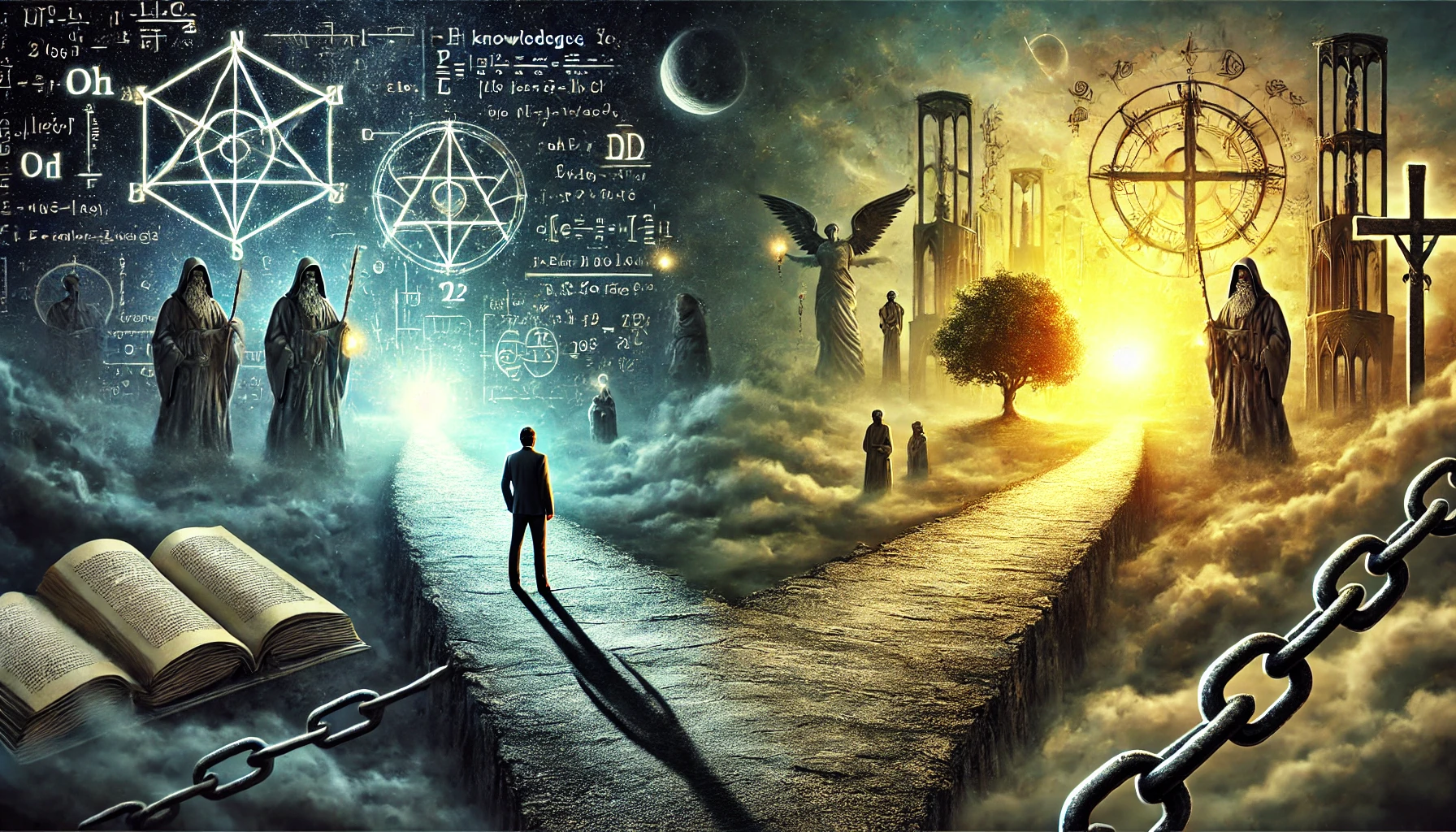
Throughout religious history, many believers have faced a fundamental dilemma: should they follow faith blindly, or should they use intellect and logic to examine their beliefs? The following lesson addresses this question by analyzing common arguments made by religious dogmatists and responding to them with reason and textual evidence.
1️⃣ The Fallacy of Progressive Revelation and the Misuse of 2:106
One of the common arguments made by religious dogmatists is that divine laws are "gradually revealed" and that certain rulings in sacred texts were "canceled" or "updated" over time. This claim is often based on Qur’an 2:106:
📜 Qur’an 2:106
"Whatever We abrogate (naskh) from a sign or cause it to be forgotten, We bring one better than it or similar to it. Do you not know that Allah has power over all things?"
📌 Logical Problems with This Interpretation:
If divine laws are perfect, why would they need to be replaced? Would this not imply that earlier laws were imperfect?
If God knew what was best from the beginning, why issue temporary laws instead of giving the best laws outright?
This reasoning contradicts Isaiah 40:8:
📜 "The word of our God stands forever."
📌 Conclusion:
✅ True divine law is unchangeable. What has been distorted over time is human interpretation, not God's original commands.
2️⃣ The Misconception of Alcohol Prohibition in Stages
Many Muslims argue that alcohol was gradually prohibited in the Qur'an, but historical and scriptural analysis suggests otherwise.
📜 Leviticus 10:9
"Do not drink wine or strong drink, neither you nor your sons, when you enter the Tent of Meeting, lest you die. This shall be a statute forever throughout your generations."
📜 Numbers 6:2-3
"When someone takes the Nazirite vow to dedicate himself to the Lord, he shall abstain from wine and strong drink. He shall not drink vinegar made from wine or strong drink; he shall not drink any grape juice nor eat grapes, fresh or dried."
📜 Luke 1:15
"For he shall be great before the Lord, and he shall drink no wine nor strong drink."
📜 Qur’an 4:43
"O you who believe! Do not approach prayer while intoxicated, until you know what you are saying."
📌 Key Observations:
The Torah already contained laws that restricted alcohol in certain situations.
Nazirites voluntarily took vows of complete abstinence.
Christian tradition also acknowledged certain people avoiding alcohol for spiritual reasons.
The Qur'an does not introduce a new concept but rather echoes what was already practiced.
📌 Critical Question:
If alcohol was truly "Satan’s handiwork," as claimed in Qur’an 5:90, then why does Qur’an 2:219 say that it has both benefits and harms?
📌 Conclusion:
✅ The Qur'an’s treatment of alcohol is consistent with previous scriptures, not a progressive ban but a reaffirmation of pre-existing laws.
3️⃣ The Contradiction in the Length of Breastfeeding in the Qur'an
📜 Qur’an 2:233
"Mothers shall breastfeed their children for two whole years, for those who wish to complete the nursing period."
📜 Qur’an 46:15
"His mother carried him in hardship and delivered him in hardship, and his bearing and weaning lasted thirty months."
📌 Logical Inconsistency:
If pregnancy lasts 9 months, and the total time for pregnancy and weaning is 30 months, that leaves 21 months for breastfeeding—not 24 months as stated in 2:233.
How can both verses be correct at the same time?
📌 Conclusion:
✅ This is a clear textual contradiction that cannot be explained by "gradual revelation."
4️⃣ The Dogmatic Belief That a Prophet’s Seal Means the End of Prophethood
📜 Qur’an 33:40
"Muhammad is not the father of any of your men, but he is the Messenger of Allah and the Seal of the Prophets (Khatam an-Nabiyyin)."
📌 Linguistic Analysis:
The word Nabiyyin (prophets) does not mean Messengers (Rasul).
A prophet (Nabi) receives revelation but does not necessarily bring a new law.
A messenger (Rasul) brings a new law.
If Muhammad is the seal of the prophets, does this mean no new messengers can come?
If God can change laws (as argued using 2:106), why can't He send a new messenger?
📌 Critical Question:
If one accepts that God changes laws over time, then why reject the Baha’i belief that a new revelation came with the Báb (who allowed the eating of pork)?
📌 Conclusion:
✅ If God can change the laws, then a new messenger is possible. If no new messenger is possible, then God cannot change His laws. You cannot have both.
5️⃣ The Humanization of God in Islamic Belief
Many Muslims accuse others of anthropomorphizing God, yet Islamic texts themselves contain contradictions about God's nature.
📜 Exodus 3:14
"And God said to Moses, 'I AM WHO I AM.'"
📜 Qur’an 6:103
"Vision perceives Him not, but He perceives [all] vision."
📜 Qur’an 55:27
"And there remains the Face of your Lord, full of Majesty and Honor."
📜 Qur’an 68:42
"The Day the shin will be uncovered, and they are invited to prostrate but they will not be able."
📌 Logical Contradictions:
If God is beyond vision, then why does He have a face and shin?
If God is above all things, then where is He? Above the Throne or omnipresent?
📌 Critical Question:
Is God a human-like being with a shin and a face, or is He beyond all comprehension?
📌 Conclusion:
✅ The Islamic concept of God contains contradictions, indicating possible interpolations or misunderstandings.
Final Thoughts – Are You Following Truth or Justifying Your Beliefs?
Many religious believers claim they are following divine truth, yet when faced with contradictions, they defend their beliefs instead of questioning them.
📜 John 8:32
"Then you will know the truth, and the truth will set you free."
📜 Isaiah 1:18
"Come now, let us reason together, says the Lord."
📌 Key Takeaway:
✅ True faith does not fear questioning. If a belief collapses under scrutiny, then it was never strong to begin with.
✅ Following dogma means ignoring contradictions in order to defend a system of belief rather than seeking truth.
✅ Following truth means being willing to abandon beliefs if they are proven false.
The real question is: Do you seek truth, or do you seek to defend what you already believe?